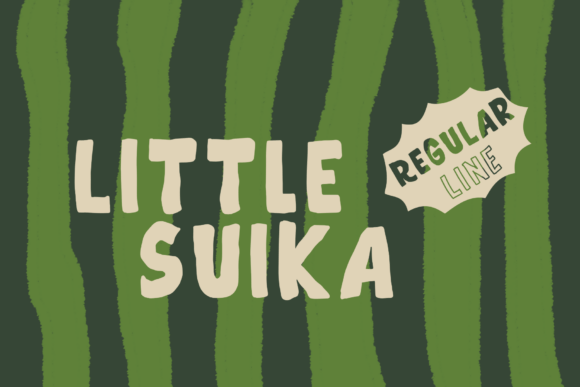
Little Suika: A Quirky Display Font for Editorial Branding
I remember sitting at my desk, staring at a blank InDesign file for a digital coaching workbook. The content was solid—structured, valuable, and ready to go—but the typography felt sterile. It lacked soul. I needed something that would catch the eye without shouting, something that could serve as a visual anchor for a brand identity that wanted to feel approachable yet professional. That was when I tested Little Suika, a fun and quirky display font that promised to add character to creative ideas. What started as a quick experiment quickly became the backbone of the entire layout.
If you are an editorial designer, publisher, or content creator looking to elevate your publication’s visual hierarchy, understanding how a display typeface functions within a broader typographic system is crucial. This review explores how Little Suika performs in real-world publishing contexts, from newsletter headers to ebook covers, and why its specific personality makes it a compelling choice for modern design projects.
Little Suika for Newsletter Headers and Digital Magazines
In the crowded space of digital content, first impressions are everything. When designing a weekly newsletter or a digital magazine header, the headline needs to stand out amidst a sea of text. Little Suika steps into this role with a distinct rhythm and playful geometry that commands attention without sacrificing legibility. Unlike overly ornate script fonts that can become difficult to scan on mobile devices, Little Suika maintains a clean structure that works beautifully for short-form headlines.
I used this font for the masthead of a lifestyle blog redesign, pairing it with a minimalist sans serif font for the body copy. The contrast created a sophisticated yet whimsical mood that aligned perfectly with the brand’s voice. Because it is classified as a display font, it is designed to be read at larger sizes, making it ideal for titles, section dividers, and pull quotes. Its quirky details—such as unique terminal shapes and balanced proportions—add a layer of visual interest that keeps readers engaged as they scroll through long-form articles.
Visual Hierarchy in Content Structure
One of the most challenging aspects of editorial design is maintaining clear visual hierarchy. You need to guide the reader’s eye naturally from the headline to the subhead, and finally to the body text. Little Suika excels here because its distinctive character allows it to act as a strong visual stopper. When used for article titles or chapter openers, it creates a clear separation between sections, helping readers navigate the content more easily.
- Headline Impact: Use Little Suika for main headlines where you want to inject personality immediately.
- Section Dividers: Employ smaller sizes of the font to create subtle breaks between major topics.
- Pull Quotes: Highlight key insights by setting them in Little Suika to draw the eye back into the flow of the text.
Little Suika for Printable Planners and Coaching Workbooks
The market for digital products like printable planners, worksheets, and coaching workbooks is saturated, but few creators focus on the emotional connection their design evokes. A planner isn’t just a tool; it’s a companion in the user’s journey. Little Suika brings a sense of warmth and friendliness to these functional documents. Its "fun and quirky" nature softens the often rigid structure of grids and lists, making the process of planning feel less like a chore and more like a creative act.
In a recent project for a wellness coach, we replaced standard bold sans serifs with Little Suika for the worksheet titles. The result was a document that felt inviting and encouraging. The font’s rounded edges and balanced weight make it highly readable even when printed at smaller sizes, which is critical for checklists and action items. However, it is important to remember that while it is versatile, it remains a creative font best suited for accents rather than dense paragraphs.
Readability Considerations for Print and PDF Exports
When exporting designs for print or PDF distribution, testing your typography is non-negotiable. While Little Suika shines in large formats, its quirks can become distractions if overused in body copy. For long-form reading, such as the instructional text within a workbook, it is better to pair it with a highly readable serif font or a neutral sans serif font. This combination ensures that the decorative elements (the headings) provide charm, while the body text provides clarity.
For screen reading, especially on mobile devices, ensure that the line height and letter spacing are adjusted to accommodate the font’s unique proportions. A slightly looser tracking can enhance the airy, friendly vibe of Little Suika, preventing the letters from feeling cramped in narrow columns.
Little Suika for Wedding Guides and Lifestyle Branding
Beyond digital products, Little Suika has found a natural home in the realm of lifestyle branding and event design. Wedding guides, invitation suites, and boutique branding materials often require a touch of elegance mixed with individuality. Little Suika offers a modern twist on traditional display typography. It avoids the clichés of excessive flourishes common in wedding fonts, opting instead for a contemporary, clean quirkiness that feels fresh and relevant.
I recently saw this font used effectively in a digital magazine layout focused on sustainable living. The editor chose Little Suika for the cover story titles, creating a striking contrast against earthy, textured backgrounds. The font’s ability to convey mood through shape alone allowed it to communicate the publication’s values of creativity and authenticity without needing additional graphical elements.
Font Pairing Strategies for Editorial Design
To maximize the effectiveness of Little Suika, thoughtful font pairing is essential. Since it is a display font with high visual weight, it pairs well with understated typefaces. Here are two reliable combinations for your next project:
- Little Suika + Modern Serif: Pair the headline font with a classic serif like Garamond or Caslon for body text. This creates a timeless editorial look that feels literary and refined.
- Little Suika + Clean Sans Serif: Combine it with a geometric sans serif like Helvetica Now or Montserrat for captions, navigation, and UI elements. This pairing leans into a contemporary, tech-forward aesthetic suitable for blogs and online courses.
Practical Licensing and File Format Checks
Before integrating Little Suika into your commercial projects, whether it’s a paid newsletter template, a client publication, or a downloadable asset, always verify the licensing terms. As a premium font, it may come with specific restrictions regarding the number of end users or the types of digital downloads permitted. Ensure you have the correct license for your use case, particularly if you are selling templates that include the font files.
Additionally, check the included styles. Does the family offer multiple weights? Are there alternate glyphs or ligatures that can add further customization to your layouts? Access to a full range of styles allows for greater flexibility in establishing visual hierarchy and consistency across your brand identity. By taking the time to explore all available features, you can fully leverage the potential of Little Suika to create cohesive, engaging, and professional design assets.