Learning School Typeface for Modern Web Design
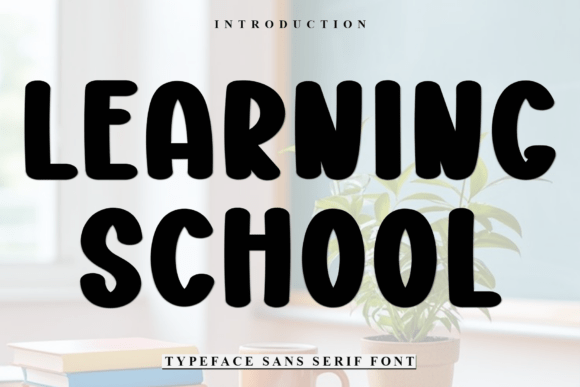
Learning School is a beautiful and eye-catching font designed with a soft, unique touch. Its distinctive strokes give it a special character, making it meaningful and versatile for future use. With varying weights and a refined aesthetic, this Display typeface bridges the gap between traditional elegance and modern digital minimalism. For web designers and UI creators seeking to elevate their visual hierarchy without sacrificing readability, understanding how to integrate such a specialized Fonts library into responsive layouts is essential.
Enhancing Hero Sections with Learning School Display Typography
The hero section of any landing page or homepage is the first point of contact for users, and typography here dictates the tone of the entire experience. Learning School excels in this high-visibility area because its soft, rounded edges invite interaction rather than intimidating the viewer. Unlike harsh geometric sans serifs that can feel cold on digital screens, the unique touch of Learning School adds warmth to bold headlines. When used as a primary headline font, it captures attention immediately while maintaining a professional demeanor suitable for SaaS founders, creative agencies, and boutique online stores.
To maximize impact, consider using the heaviest weight of Learning School for short, punchy phrases in your hero banner. The distinctive strokes mentioned in its design description provide enough visual interest to stand out against clean backgrounds or subtle image overlays. However, ensure you pair it with ample negative space. Because display fonts carry significant visual weight, crowding them with too much surrounding text diminishes their effectiveness. A large-scale application of Learning School allows the unique character of each letterform to breathe, creating an immediate impression of quality and attention to detail.
Optimizing Headings for Visual Hierarchy
In complex web layouts, establishing a clear visual hierarchy is critical for guiding user scanning behavior. Learning School serves as an excellent tool for secondary headings (H2s and H3s) where you want to break up long blocks of body text. Its distinct personality prevents sections from blending together, helping users navigate content more intuitively. Whether you are designing a course sales page, a blog header, or a portfolio site, using Learning School for subheadings creates a rhythmic flow that keeps readers engaged.
- Section Dividers: Use the font to create decorative dividers or labels that separate different parts of a long-form article or product feature list.
- Call-to-Action Accents: While not ideal for the button text itself due to legibility concerns at small sizes, Learning School works beautifully as a pre-header or tagline above a primary CTA button.
- Editorial Elements: For brands aiming for an editorial identity, use the font to highlight pull quotes or key statistics within a webpage layout.
Building Brand Identity Through Consistent Font Pairing
No single typeface can do all the heavy lifting in a comprehensive web design project. This is where strategic font pairing becomes vital. Learning School, being a decorative display font, requires a neutral companion to handle body copy and functional interface elements. The best practice is to pair the expressive nature of Learning School with a highly readable sans-serif or a classic serif font for paragraphs, navigation menus, and footers.
For a modern, tech-forward brand, pair Learning School with a clean geometric sans-serif like Inter or Roboto. This combination balances the softness of the display font with the structural clarity of the body text. Alternatively, for educational platforms, coaching websites, or lifestyle blogs, pair it with a humanist serif. This pairing reinforces the "learning" aspect of the font name, suggesting wisdom, tradition, and trustworthiness. By maintaining this consistent pairing across all pages—from the homepage to the checkout process—you build a cohesive brand identity that feels intentional and polished.
Ensuring Readability Across Devices
As a designer, you must test how Learning School performs on various screen sizes. While display fonts are meant to be large, they often lose their charm when scaled down incorrectly. On mobile devices, avoid using Learning School for dense text or small captions. Instead, reserve it for titles and headers that remain relatively large even on smaller viewports. Ensure that the contrast ratio between the font color and the background meets accessibility standards (WCAG). The soft touch of the font might require slightly higher contrast on light gray backgrounds to maintain legibility, especially for users with visual impairments.
Applying Learning School to Digital Products and E-commerce
Beyond standard websites, Learning School is a valuable asset for digital product creators. If you sell templates, Notion dashboards, or Canva kits, including this font in your preview images adds a layer of sophistication that appeals to buyers looking for premium design assets. In e-commerce, use the font for promotional banners, sale announcements, and new arrival tags. The unique strokes of the letters add a handcrafted feel to digital goods, which can subtly influence purchasing decisions by suggesting care and quality in the product creation process.
- Landing Pages: Use Learning School for the main value proposition to create an emotional connection before diving into technical specifications.
- Social Media Graphics: Create consistent branding for Instagram stories or Pinterest pins by using the font for overlay text, ensuring your social presence matches your website’s aesthetic.
- Email Marketing: Incorporate the font in email headers to increase open rates and click-through rates by making newsletters visually distinct from generic corporate emails.
Technical Considerations for Web Implementation
Before integrating Learning School into your projects, verify the included file formats and webfont availability. Most modern web projects require WOFF2 files for optimal performance and compression. Check if the font family includes multiple weights (Light, Regular, Bold, Black) to support varied typographic scales. Additionally, confirm multilingual support if your target audience speaks languages other than English; some display fonts lack extended character sets needed for accents and special symbols.
Commercial licensing is another crucial step. Ensure you have the appropriate license for web embedding, client projects, and digital templates. Using a font without proper licensing can lead to legal issues and takedown notices. Once licensed, implement the font using CSS @font-face rules, prioritizing the loading of the most frequently used weights to improve Core Web Vitals scores. By treating Learning School not just as a visual element but as a functional component of your web architecture, you ensure that your designs are both beautiful and technically sound.