Pixel Quest: A Retro Pixel Typeface Review for Modern Branding
I remember the exact moment I opened a blank brand board for a new client. It was a boutique skincare line that wanted to break away from the typical minimalist, serif-heavy aesthetic dominating the market. They wanted something playful but premium, nostalgic yet sharp. That’s when I dragged Pixel Quest into the mix. As an experienced brand designer, I’ve tested countless typefaces, but few capture the specific tension between retro charm and modern usability quite like this display font. What started as a quick sketch for a logo concept quickly evolved into a full visual identity system, proving that Pixel Quest is more than just a novelty; it is a serious tool for contemporary design.
Pixel Quest for Logo Design and Brand Identity Systems
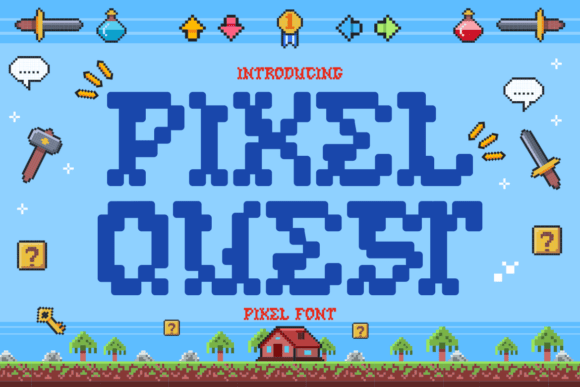
When you first look at Pixel Quest, you are immediately struck by its blocky, 8-bit structure, which perfectly captures the essence of classic arcade aesthetics without feeling dated. In my recent project, I used this font to anchor the primary logo mark for a creative studio. The challenge with pixel fonts in branding is often legibility at small sizes, but Pixel Quest handles this surprisingly well. Its geometric precision ensures that even when scaled down for favicons or app icons, the character remains distinct and recognizable.
The personality of this typeface is bold and confident. It doesn’t whisper; it declares. This makes it an excellent choice for brands that want to signal creativity, innovation, or a connection to digital culture. However, it requires restraint. I found that using Pixel Quest as the sole typeface for a long-term brand identity can become visually exhausting if not balanced correctly. Instead, I treated it as the hero display font, using it for the logotype and key headers, while pairing it with a clean sans serif font for body copy. This combination allowed the brand to maintain a professional tone while still leveraging the unique appeal of the pixel aesthetic. The result was a brand identity that felt both grounded and exciting, appealing directly to a younger, digitally-native demographic.
Pixel Quest for Packaging Design and Product Labels
Moving beyond digital screens, I put Pixel Quest to the test on physical packaging mockups. Specifically, I designed labels for a limited-edition craft beverage brand. The goal was to create shelf presence that stood out among traditional organic typography. The high contrast of the pixelated edges against the matte finish of the label created a striking tactile and visual experience. Because Pixel Quest is a display font, it commands attention. When applied to product names or short taglines, it acts almost like a graphic element itself.
One critical observation during this phase was the importance of spacing. Pixel fonts have inherent breathing room due to their grid-based construction. Tight tracking (letter-spacing) can cause the blocks to merge, creating muddy shapes that are hard to read. I learned to give the text ample negative space, allowing each "pixel" to breathe. This approach not only improved readability but also elevated the perceived value of the packaging. It didn’t look like a cheap sticker; it looked like intentional, high-end design. For entrepreneurs and small business owners looking to differentiate their products, using a creative font like Pixel Quest on packaging can significantly boost recognition and engagement.
Pixel Quest for Web Design and Social Media Graphics
In the realm of digital assets, Pixel Quest shines brightest in environments where screen resolution supports its sharp edges. I integrated this font into a website header and a series of Instagram posts for a local gaming café. The retro-inspired pixel typeface brings the charm of classic video games to your designs, which resonated deeply with the target audience. On web design, particularly in hero sections or call-to-action buttons, the font adds a layer of interactivity and fun that standard web fonts often lack.
However, technical considerations are paramount here. While Pixel Quest looks stunning at large sizes, it is not suitable for long-form body text. Reading paragraphs of pixelated text on a mobile device can be fatiguing for users. My advice is to use it strictly for headlines, navigation menus, and short phrases. For social media graphics, such as flyers or event posters, the font’s bold nature ensures that the message is conveyed instantly. When paired with vibrant colors and simple geometric shapes, Pixel Quest creates a cohesive visual language that feels native to the platform. It bridges the gap between editorial design and digital marketing, offering a fresh take on promotional materials.
Font Pairing and Versatility in Modern Typography
No single typeface can do everything, and Pixel Quest is no exception. To maximize its potential, thoughtful font pairing is essential. In my review process, I experimented with various combinations before settling on a modern sans serif font for supporting text. The contrast between the rigid, structured pixels of Pixel Quest and the fluid, clean lines of a neutral sans serif creates a dynamic hierarchy. This pairing allows the brand to communicate complex information clearly while maintaining a distinctive voice through its headings.
It is also worth noting the versatility of Pixel Quest across different weights and styles. If the package includes multiple weights, lighter versions can be used for secondary information, adding depth to the typographic system. Some designers might be tempted to pair it with a script font for a "handmade" feel, but I found that this often clashes with the digital precision of the pixel aesthetic. A clean, geometric sans serif or a subtle serif font tends to work better, providing a stable foundation that lets the pixel font take center stage. This strategic approach ensures that your design assets remain professional and accessible, rather than appearing cluttered or overly decorative.
Practical Considerations for Commercial Use
Before incorporating Pixel Quest into any final client work, it is crucial to review the included styles and check the commercial font licensing. As a premium font, understanding the scope of usage—whether for print-on-demand products, merchandise, websites, or templates—is vital to avoid legal issues. I always recommend testing the font extensively in realistic scenarios before committing to a final design. Create mockups for business cards, email newsletters, and app interfaces to see how it holds up under pressure.
While Pixel Quest is a fantastic addition to any designer’s toolkit, it is not a one-size-fits-all solution. It may not be suitable for formal corporate communications, legal documents, or projects requiring a sense of traditional elegance. Its strength lies in its specificity: it is best used as a display font, accent font, or decorative font where its unique character can enhance the overall narrative. By respecting its limitations and leveraging its strengths, designers can create compelling brand identities that stand out in a crowded marketplace. Whether you are a freelancer, a creative studio, or a handmade seller, Pixel Quest offers a reliable way to inject nostalgia and style into your visual communication.