Donuts Donky Typeface: A Playful Display Font for Kid-Focused Editorial Design
I was staring at a blank canvas, trying to design the cover for a new children’s activity workbook, when I realized that my usual go-to geometric sans-serifs felt too cold. The project needed warmth, energy, and a touch of whimsy without sacrificing legibility. That is when I pulled Donuts Donky into my layout software. It immediately shifted the mood of the entire page. This isn’t just another decorative typeface; it is a carefully crafted display font that exudes youthful charm and playful energy, making it an ideal tool for creators who need to capture attention in crowded digital spaces.
Why Donuts Donky Works Best for Kid-Focused Designs and Children’s Content
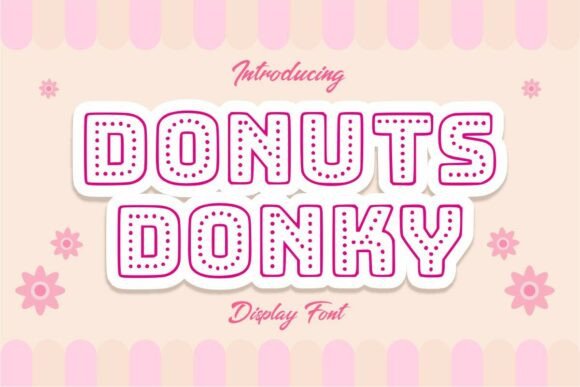
When you are designing for young audiences or family-oriented brands, the typography must speak their language before they even read the words. Donuts Donky fits this niche perfectly because its charming dotted details add a unique and playful touch, making it perfect for kid-focused designs. As a designer, I found that the font’s personality does the heavy lifting for branding. Whether you are creating a printable planner for elementary students, a chapter opener for a picture book, or a header for a parenting blog, this font establishes an immediate connection with the reader. It feels approachable and fun, yet structured enough to maintain professional standards in editorial layouts. By choosing a creative font like Donuts Donky, you signal to your audience that the content inside is engaging, lighthearted, and designed with care.
How Donuts Donky Enhances Blog Headers and Newsletter Graphics
In the world of digital publishing, first impressions are everything. I tested Donuts Donky on a lifestyle blog redesign specifically for a section dedicated to weekend activities and family outings. The font’s distinct character helped the headlines pop against clean white backgrounds, drawing the eye immediately. Because it is a display font, it excels in large sizes where its quirks can be appreciated. When used for newsletter graphics or social media headers, the font adds a layer of visual interest that standard typefaces lack. It breaks the monotony of grid-based web design, offering a human touch that resonates with readers scrolling through their feeds. For independent content brands and bloggers, using a modern typography style like this can differentiate your publication from competitors who rely on generic system fonts.
The Visual Rhythm of Donuts Donky Dotted and Solid Styles
One of the most compelling aspects of this typeface is its versatility within itself. With two distinctive styles—Dotted and So (Solid), designers have a powerful toolkit for creating visual hierarchy. In my workflow, I often use the Dotted style for main titles to create texture and softness, while reserving the Solid style for subtitles or secondary headings where clarity is paramount. This combination allows for dynamic contrast without needing to introduce a second font family. The dotted version brings a sense of lightness and airiness, while the solid version grounds the design. This duality makes Donuts Donky exceptionally useful for editorial design projects that require both flair and function. You can alternate between these weights to guide the reader’s eye through long-form content, ensuring that the layout remains engaging from start to finish.
Using Donuts Donky for Ebook Covers and Digital Magazine Layouts
Cover design is a high-stakes environment where typography must communicate genre and tone instantly. I applied Donuts Donky to a mock-up for a coaching workbook aimed at parents. The font’s playful yet sturdy structure suggested reliability mixed with creativity, which was exactly the brand identity we wanted to convey. For ebook covers and digital magazine layouts, a premium font like Donuts Donky ensures that your product stands out in thumbnail views. The dotted details catch the eye even at small resolutions, acting as a subtle hook for potential readers. Furthermore, the font’s friendly demeanor reduces the perceived intimidation of complex topics, making it suitable for educational materials, self-help guides, and interactive PDFs. When paired correctly, it elevates the perceived value of digital products, signaling to buyers that the content is professionally curated.
Font Pairing Strategies for Editorial Consistency
A common mistake in design is letting a display font do all the work, which can lead to visual fatigue. To maintain readability, I recommend pairing Donuts Donky with a neutral, highly legible serif font or a clean sans serif font for body copy. In my recent project, I paired the playful headlines with a classic serif for the article text, creating a balanced composition that felt both trendy and timeless. The sans-serif option works well for captions, navigation menus, and data tables, providing a sharp contrast to the rounded edges of the display font. This strategy supports visual hierarchy by clearly distinguishing between decorative elements and informational content. For web design and responsive layouts, this pairing ensures that the site remains accessible and easy to scan on mobile devices. Remember that good font pairing is about complementing, not competing, allowing each typeface to shine in its intended role.
Practical Considerations for Printables and Commercial Licensing
Before finalizing any design asset, it is crucial to review the technical specifications and licensing terms of the font. Donuts Donky comes with specific file formats and character sets that should be verified for your intended use case. If you are creating physical printables, such as worksheets or greeting cards, ensure that the resolution and vector quality meet print standards. For commercial use, including paid newsletters, client publications, or templates sold on marketplaces, always check the commercial font licensing agreement. Some fonts allow unlimited usage, while others may require separate licenses for different products. Additionally, verify if the font includes multilingual support if your audience is global. Checking included alternates and ligatures can also save time during the design process, allowing you to quickly swap characters for better aesthetic balance. By being thorough with these details, you protect your brand and ensure a smooth production workflow.
Optimizing Donuts Donky for Mobile and Screen Reading Experiences
As more users consume content on smartphones, typography must adapt to smaller screens. While Donuts Donky is primarily a display font, its clear letterforms remain readable at moderate sizes on mobile layouts. However, for extended reading passages, it is best practice to revert to a body font optimized for screen reading. Use Donuts Donky for pull quotes, section dividers, and introductory paragraphs to break up text and maintain engagement. This approach respects the reader’s cognitive load while still injecting personality into the digital experience. When exporting to PDF for distribution, test the file on various devices to ensure that the dotted details do not blur or disappear due to compression. Proper optimization ensures that the playful energy of the font translates effectively across all platforms, maintaining the integrity of your editorial design regardless of how the user accesses it.