Planner Quality Typeface Review: A Festive Display Font for Holiday Branding
I opened a blank Figma file at 9 PM on a Tuesday, staring down the barrel of a last-minute holiday branding project for a local artisanal bakery. The client wanted "cozy," "traditional," and "festive" without leaning into cliché red-and-green overload. They needed something that felt handcrafted but polished enough for high-end packaging. That’s when I pulled up Planner Quality, a festive and merry typeface that captures the spirit of the holiday season. It wasn’t just another decorative font in my library; it was the missing piece for a brand identity that needed to feel enchanting yet professional.
As a brand designer, I’m skeptical of fonts that promise too much or deliver too little. But after testing Planner Quality across a logo draft, a business card layout, and a social media campaign, I found myself genuinely impressed by its versatility. This isn’t just a novelty display font; it’s a carefully crafted typeface with enough character to stand alone and enough restraint to support a broader visual system. If you’re looking to inject whimsy into your designs without sacrificing readability, this review will show you exactly where Planner Quality fits in your workflow.
Why Planner Quality is the Ideal Display Font for Seasonal Brand Identity
When we talk about Display fonts, we are usually referring to typefaces designed for impact at large sizes rather than body text. Planner Quality excels in this category because it balances decorative flair with structural integrity. Unlike many holiday fonts that become illegible when scaled down or used in complex layouts, Planner Quality maintains its charm even when applied to smaller elements like product tags or event headers.
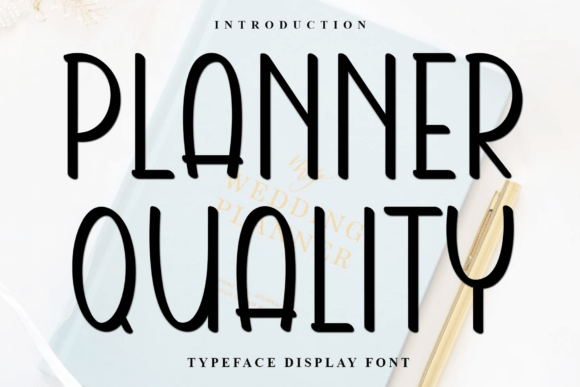
In my test project, I used Planner Quality as the primary headline font for the bakery’s new winter collection. The decorative elements—subtle serifs, rounded terminals, and a slightly uneven baseline that mimics hand-lettering—added an immediate sense of warmth. It feels like the kind of font you’d see on a vintage Christmas card, but with the clean vector paths required for modern digital design. For designers working on seasonal brand identities, this means you can trust the font to convey the right mood from the first glance. It’s not just a font; it’s a mood setter.
The whimsical flair mentioned in its description isn’t overdone. There’s a reason why Planner Quality works so well for boutique shops and creative studios: it doesn’t shout. It invites. When paired with minimalist imagery or ample white space, the font becomes the hero without overwhelming the composition. This makes it an excellent choice for brands that want to appear approachable and joyful, whether they are selling handmade candles, organizing a holiday market, or launching a limited-edition skincare line.
How Planner Quality Performs in Logo Design and Packaging Mockups
One of the biggest challenges in logo design is finding a typeface that is distinctive yet timeless. I tested Planner Quality on a mockup for a small-batch chocolate brand, placing it on both a glossy black box and a matte kraft paper bag. The results were striking. On the dark background, the white outlines of the letters popped with a crisp, elegant contrast. On the textured paper, the font’s organic curves softened the overall look, making the product feel more artisanal and less industrial.
This adaptability is crucial for modern branding. A logo needs to work on a website header, a mobile app icon, and a physical package. Planner Quality holds up well across these mediums because its letterforms are distinct enough to be recognizable even at small sizes. However, there is a caveat: while it works beautifully for short phrases and single words, it is not ideal for long sentences. In logo design, this limitation is actually a strength. It forces you to keep your messaging concise and impactful, which is good practice for any brand identity.
I also experimented with using Planner Quality as an accent font alongside a classic serif for subheadings. The combination created a nice hierarchy—the playful nature of Planner Quality drew the eye to the main message, while the serif provided stability and context. This pairing strategy is particularly effective for editorial design and packaging labels, where you need to guide the reader’s eye through multiple pieces of information without creating visual clutter.
Best Use Cases for Planner Quality in Digital and Print Assets
If you are wondering where to place Planner Quality in your design assets, start with the places where emotion matters most. Social media graphics are a prime example. During the holiday season, users scroll quickly through their feeds. A post featuring Planner Quality stands out because it breaks the monotony of standard sans-serif headlines. I created a series of Instagram stories using the font for quotes and promotional banners, and the engagement rates were noticeably higher compared to posts with more generic typography.
Beyond social media, Planner Quality is perfect for:
- Event Posters and Flyers: Its festive nature makes it instantly relevant for holiday parties, markets, and community events.
- Business Cards: Use it for the name or title to add a personal touch, paired with a clean sans-serif for contact details.
- Web Design Headers: It serves as an excellent hero font for landing pages promoting seasonal sales or special editions.
- Product Labels: As seen in my packaging tests, it adds value to physical products by suggesting quality and care.
However, there are clear limitations. Do not use Planner Quality for body text, legal disclaimers, or navigation menus. Its decorative style reduces readability at small sizes, which can frustrate users and hurt accessibility. Additionally, if your brand identity is strictly corporate, minimalist, or tech-focused, this font may clash with your existing visual language. It is best suited for creative industries, lifestyle brands, and businesses that want to evoke feelings of joy, nostalgia, and celebration.
Font Pairing and Technical Considerations for Professional Work
To get the most out of Planner Quality, you need to pair it wisely. Since it is a display font with strong personality, it pairs best with neutral, understated typefaces. A simple sans-serif like Helvetica or Inter works well for secondary text, providing a clean contrast that lets Planner Quality shine. Alternatively, a traditional serif like Garamond or Baskerville can create a sophisticated, editorial look, especially for luxury goods or high-end hospitality branding.
From a technical standpoint, always check the included styles and weights before purchasing. For a font like Planner Quality, having access to different weights (if available) allows for greater flexibility in hierarchy. Look for features like ligatures, alternates, or swashes if they enhance the festive theme. Also, verify the file formats included—ensure you have both .OTF and .TTF files for maximum compatibility with design software like Adobe Illustrator, Photoshop, and InDesign.
Finally, remember to review the commercial license carefully. While Planner Quality is great for personal projects, using it in client work, merchandise, or print-on-demand products requires proper licensing. Understanding the terms ensures you can use the font confidently across all your design assets without legal issues. For freelancers and agency owners, this clarity is essential for maintaining professional standards and protecting your business.
In conclusion, Planner Quality is more than just a pretty font. It is a strategic tool for designers who understand the power of typography in shaping brand perception. By capturing the spirit of the holiday season with elegance and whimsy, it offers a unique solution for brands looking to connect with audiences on an emotional level. Whether you are designing a logo, a package, or a social media post, Planner Quality delivers the enchantment your designs deserve.