Coming Baby Typeface Review: A Casual Display Font for Friendly Branding
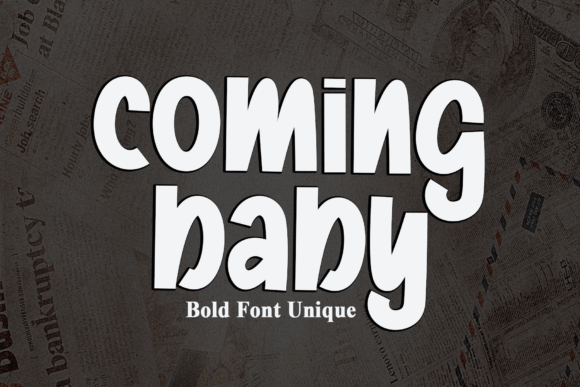
I opened a blank Figma file at 10 AM, staring down a client brief that asked for a "warm, approachable, yet neat" identity. The project was for a small-batch skincare line called Coming Baby, and the challenge was to make the packaging feel premium without losing that cozy, handmade vibe. I skipped the usual go-to geometric sans-serifs and pulled up Coming Baby, a casual and neat display font that combines simplicity with a friendly, approachable vibe. It captures the essence of modern boutique branding better than I expected, especially when you look at how it handles clean lines, balanced letterforms, and subtle rounded edges.
This review isn’t just about aesthetics; it’s about how this typeface performs in real-world commercial design assets. After testing Coming Baby across logo drafts, brand boards, packaging mockups, business cards, website headers, and social media layouts, here is my honest take on whether this display font deserves a spot in your creative toolkit.
Why Coming Baby Works as a Premium Display Font for Boutique Brands
When designers talk about Display fonts, they often worry about readability or legibility at small sizes. However, Coming Baby is designed specifically to shine in larger formats where personality matters more than dense text. The font’s visual characteristics—clean lines paired with those subtle rounded edges—create a softness that feels inviting rather than corporate. In typography terms, this is a modern serif or sans-serif hybrid that leans heavily into character.
In our skincare project, we used Coming Baby as the primary headline font. Because it features balanced letterforms, it maintains a sense of structure even while feeling relaxed. This balance is crucial for brand identity. If a font is too quirky, it can look unprofessional; if it’s too rigid, it loses charm. Coming Baby hits that sweet spot. It reads as a high-quality, premium font because the spacing (kerning) and x-height are well-proportioned. When placed on a product label, it doesn’t compete with imagery; it complements it, allowing the photography to breathe while anchoring the design with typographic confidence.
Visual Hierarchy and Readability in Packaging Design
One of the first things I tested was placing Coming Baby on a complex packaging layout. The font’s neatness prevents visual clutter. Unlike some handwritten fonts that can become illegible when scaled down or rotated, Coming Baby retains its clarity. The subtle rounded edges soften the corners of letters like 'A', 'V', and 'W', which helps guide the eye smoothly across the wordmark. This makes it an excellent choice for short phrases, ingredient lists headers, or taglines where you want to establish a mood quickly. For brands selling physical goods, this level of typographic polish signals quality before the customer even touches the product.
Testing Coming Baby in Logo Design and Brand Identity Systems
A major question for any designer is: Can this font carry a logo? Many display fonts fail here because they lack the structural integrity needed for vector scalability. I created several logo concepts using Coming Baby for the skincare brand. The results were surprisingly robust. The font’s simplicity means it scales well from a tiny favicon to a large storefront sign. The balanced letterforms ensure that the logo remains recognizable even when monochromatic or embossed on tin packaging.
However, there is a nuance to consider. While Coming Baby is versatile, it is distinctly a display font. This means it is best used as a headline font or logo font, not as body copy. In our brand board, we paired Coming Baby with a clean, neutral sans serif font for the body text. This pairing strategy is standard practice in modern typography systems. The contrast between the character-rich Coming Baby and the utilitarian body font creates a hierarchy that feels intentional and professional. Using two display fonts together would create chaos; using one display font with a functional sans serif creates harmony.
Font Pairing Strategies for Creative Studios
If you are building a brand identity around Coming Baby, consider these pairing options:
- With a Sans Serif Font: Use a geometric or humanist sans serif (like Helvetica Now or Inter) for secondary text. This emphasizes the friendliness of Coming Baby by providing a stable, neutral foundation.
- With a Serif Font: A classic serif can add a touch of heritage or luxury. This works well if the brand wants to feel established yet approachable, such as a heritage bakery or a family-owned shop.
- With a Script Font: Be cautious here. Since Coming Baby already has rounded, friendly edges, pairing it with a highly decorative script can clash. Stick to simple, elegant scripts if you need a signature element.
Coming Baby for Social Media Graphics and Digital Marketing
In the age of scrolling, your social media graphics need to stop the thumb. Coming Baby excels in this environment because its friendly, approachable vibe resonates instantly with audiences who are tired of sterile corporate messaging. I tested the font in Instagram post templates and Facebook ad headers. The clean lines ensured that the text remained readable even on small mobile screens, provided the size was kept above 24px.
The font’s aesthetic aligns perfectly with current trends in content creation, particularly for niches like lifestyle blogging, handmade crafts, and wellness coaching. When used in digital marketing materials, Coming Baby helps convey trust and warmth. It feels personal, as if a real person wrote the message, which is key for engagement. For entrepreneurs and small business owners looking to humanize their online presence, this font provides that immediate emotional connection without requiring custom illustration work.
Editorial Design and Web Headers
Beyond social media, Coming Baby is a strong candidate for web design, specifically for hero sections and blog headers. The font’s ability to capture attention while remaining neat makes it ideal for editorial design projects like zines, magazines, or newsletter headers. It adds character to the page without overwhelming the content. Just remember to use it sparingly. Let the font be the star of the header, then let the body text do the heavy lifting of communication.
Limitations and Best Practices for Commercial Use
No font is perfect, and understanding the limitations of Coming Baby is part of being an experienced designer. This font is not suitable for long-form body text. Its display nature means that reading paragraphs set entirely in Coming Baby would cause eye strain and fatigue. It is also less ideal for formal corporate environments that require strict neutrality, such as legal firms or financial institutions, where a more traditional serif or sans serif might be preferred.
Before finalizing any client work, always test the font in its actual context. Print out a proof of your packaging or website header to check for rendering issues. Look closely at the kerning between specific letter pairs, as display fonts can sometimes reveal spacing quirks at large sizes. Additionally, check the included styles. Does the font offer multiple weights? Are there italics or bold variants? Having access to a range of weights allows for greater flexibility in creating visual hierarchy within your brand identity.
Licensing and Commercial Rights
Finally, a practical note on licensing. As a commercial font, Coming Baby comes with specific usage rights. Always review the license agreement before using the font in client work, merchandise, or print-on-demand products. Some licenses restrict the number of impressions or prohibit resale of templates. Ensuring you have the correct commercial license protects both you and your client from legal issues. Investing in a proper license supports the type designer and ensures you can use the font confidently across all your design assets.
Ultimately, Coming Baby is a thoughtful, well-crafted addition to the world of display fonts. It brings a sense of calm and professionalism to projects that need a human touch. Whether you are designing a logo for a local café or a brand board for a startup, this font offers a reliable, stylish solution that balances simplicity with character.